
-

 Up to 35% offVendor:Dr. Schumacher GmbH
Dr. Schumacher ORANGE SOLVENT Glantóir Uirlisí
Only 6 leftRegular price From 8,11 €Sale price From 8,11 € Regular priceUnit price per12,48 € -

 Vendor:Dr. Schumacher GmbH
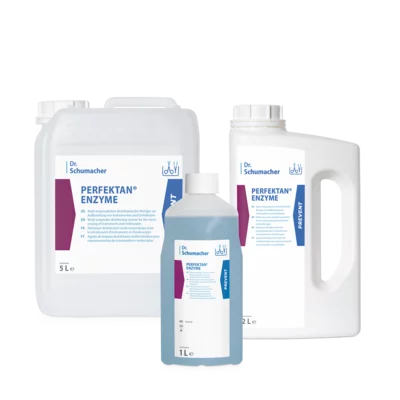
Einsímí Perfect®
Only 7 leftRegular price From 19,64 €Sale price From 19,64 € Regular priceUnit price per19,64 € -
-

 Up to 39% offVendor:Dr. Schumacher GmbH
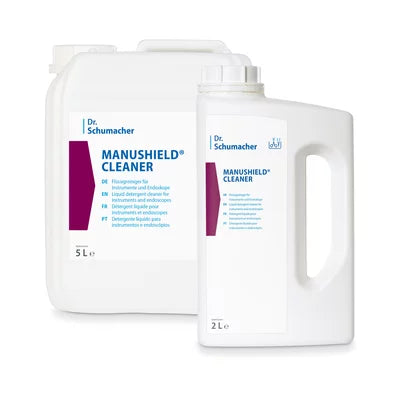
Glantóir Manushield®
Only 4 leftRegular price From 9,49 €Sale price From 9,49 € Regular priceUnit price per15,54 € -
 Up to 35% offVendor:Dr. Schumacher GmbH
Pluracym breise
Only 11 leftRegular price From 17,50 €Sale price From 17,50 € Regular priceUnit price per17,50 € -
 Vendor:Helmut Schwarz GmbH
Ciseán Ciseán Melipul Lid-Flushing do 9 gclúdach cupáin nó Med. Shell | Píosa (1 phíosa)
Regular price 6,34 €Sale price 6,34 € Regular priceUnit price per6,34 € -
 Vendor:Dr. Schumacher GmbH
Éifeacht Perfect Duo | Socraigh (800 ml)
Regular price 67,81 €Sale price 67,81 € Regular priceUnit price per67,81 € -
 Vendor:Schülke & Mayr GmbH
Schülke TermoSept NKZ Glantóir Glantóir | Canister (5 kg)
Regular price 23,09 €Sale price 23,09 € Regular priceUnit price per23,09 €






Catagóirí Eile


Instrument Cleaners – Reliable Preparation for Medical Precision
Instrument cleaners are an essential part of any professional reprocessing routine. They ensure that medical and laboratory instruments are reliably cleaned, maintained, and freed from organic or inorganic residues. Especially in clinics, practices, laboratories, or sterile supply departments, a safe pre-cleaning is crucial to minimize infection risks and ensure flawless further processing in cleaning and disinfection devices or sterilizers.
A high-quality instrument cleaner supports professionals in thoroughly cleaning even complex or sensitive instruments without damaging materials. Whether manually, semi-automatically, or mechanically – professional products for instrument reprocessing significantly contribute to hygienic safety and process stability.
What Distinguishes High-Quality Instrument Cleaners
Professional instrument cleaners are developed to reliably dissolve even stubborn protein, blood, or soap residues. Particularly proven are the Dr. Schumacher ORANGE Solvent Instrument Cleaner, the Dr. Schumacher PERFEKTAN ENZYME Instrument Cleaner, and the Dr. Schumacher PLURAZYME EXTRA. These three examples show how versatile modern solutions can be used – from enzymatic cleaners to solvent-based formulations for particularly demanding residues.
A good instrument cleaner convinces not only through effectiveness but also through properties that significantly ease professional daily work:
- High cleaning performance even with dried or difficult-to-dissolve material
- Gentle compositions that do not attack metals, coatings, and plastics
- Optimal process safety in manual and mechanical applications
- Good rinsability and low-residue formulas
- Compatibility with various types of instruments, including delicate or multipart structures
These features make instrument cleaners the foundation of a functioning reprocessing process and help ensure that instruments remain safe, durable, and reliably usable.
Application Instructions and Technical Details for Professional Use
Instrument cleaners are used in different concentrations depending on the product type. Enzymatic cleaners are particularly suitable for removing organic residues, as they effectively break down proteins and reduce manual work. Solvent or intensive cleaners are used for particularly stubborn deposits.
For manual pre-cleaning, the cleaner is prepared in the specified dilution before instruments are completely immersed. The exposure time should be adjusted to the product to avoid cleaning too briefly or unnecessarily long. Mechanical support – such as with brushes or ultrasound – further improves the result.
In machine applications in RDGs (cleaning and disinfection devices), dosage and temperature specifications must be adhered to in order to achieve optimal results and ensure material compatibility. Residues should always be thoroughly rinsed off after cleaning is completed to ensure flawless further processing.
For safe handling, it is advisable to store cleaners dry and well-sealed and to wear appropriate protective equipment during use. This keeps the cleaning process hygienic, safe, and gentle on materials.
Instrument Cleaners – Quality for Safe Reprocessing Steps
With a professional instrument cleaner, you rely on reliable hygiene, material protection, and process stability. The products in this category support thorough, standardized reprocessing and enable professionals to provide instruments in optimal condition for the next use.
Especially in medical and laboratory areas, the combination of cleaning performance and material protection is crucial. Instrument cleaners are therefore an indispensable element of modern hygiene concepts.
To complement the reprocessing chain, other product groups are available that usefully round off the cleaning process:
- Surface disinfectants for safe environmental hygiene,
- Disposable gloves and protective clothing for clean working,
- Accessories such as instrument trays, dosing aids, or instrument disinfection.
This creates a complete system that keeps instruments safe, clean, and permanently functional.
Brandaí agus Catagóirí i bhFócas
Anseo gheobhaidh tú táirgí forlíontacha a oireann don bhailiúchán reatha.


